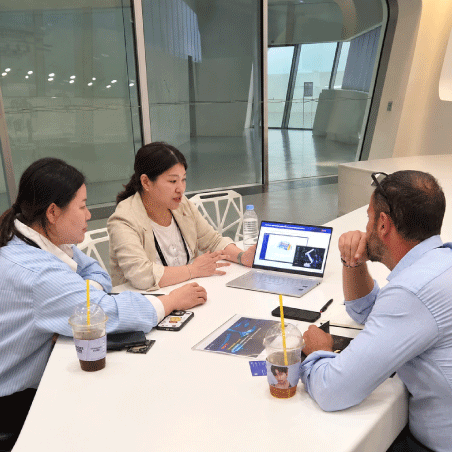

FutureMain Expands AI Predictive Maintenance in Manufacturing
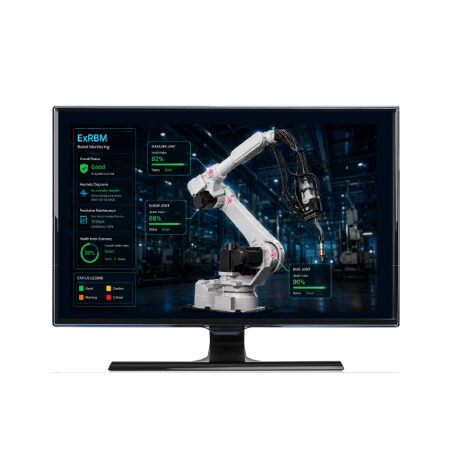
FutureMain Expands AI Predictive Maintenance in Manufacturing

FutureMain Showcases AI Equipment Diagnostics in Malaysia’s Oil & Gas Industry

Why Industrial AI Needs Engineering Knowledge
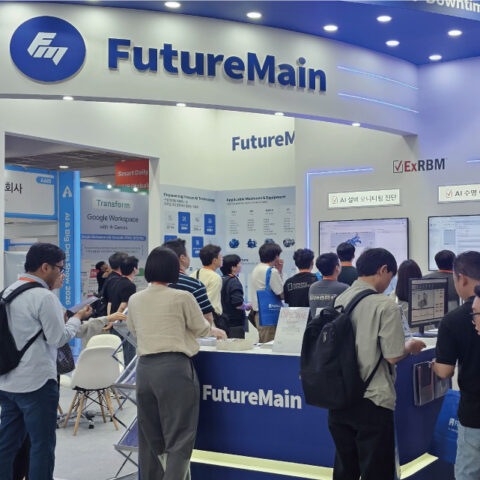
FutureMain Showcases Vertical & Physical AI-Based Automated Equipment Diagnostics at STK 2026
FutureMain Expands from the Middle East and Asia into the Australian Market
AI in Manufacturing. Why Industry 4.0 Needs More Than Alerts
[ARTICLE] Predictive Maintenance & Physical AIㅣKey Manufacturing Technologies for 2026

As manufacturing enters 2026, factories face increasing complexity, rising energy costs, and evolving labor challenges.
These pressures have accelerated the need for predictive maintenance, Physical AI, and intelligent equipment management.
Modern manufacturers now recognize that operational competitiveness depends on how effectively equipment is maintained and optimized.
This article explores how Predictive Maintenance and Physical AI are shaping manufacturing in 2026,
and how FutureMain’s ExRBM delivers real-time diagnostics, early fault detection, and data-driven operational stability.
1. The Shift from Data Collection to Intelligent Diagnostics
Smart factories have long focused on automation and IoT-driven data collection.
Sensors across the plant measure vibration, temperature, current, and pressure to monitor processes in real time.
However, 2026 marks a transition from raw data monitoring to precise diagnostic intelligence, enabling manufacturers to.
Identify specific faults
Locate fault origins
Understand progression patterns
Take proactive, data-driven actions.
The era of “monitoring-only” is over.
Manufacturers expect systems that interpret equipment behavior, not just detect anomalies.
2. Condition-Based Maintenance (CBM), The New Standard
Traditional maintenance models routine inspections and post-faults repair are no longer sustainable.
Unexpected downtime has become too costly, and equipment complexity too high.
This is why factories are moving toward Condition-Based Maintenance (CBM)
Maintenance timing is determined by actual equipment condition
Early-stage defects are detected before escalation
Unnecessary repairs and maintenance costs are reduced
Production stability improves
CBM allows manufacturers to shift from reactive operation to proactive, data-guided decision-making.
3. Why Physical AI Is Essential in 2026 Manufacturing
Many AI systems rely solely on statistical patterns or historical datasets.
But industrial equipment does not behave statistically, it behaves physically.
Machinery interacts through mechanical structures, dynamic forces, and energy flow.
This is why Physical AI has emerged as a critical technology.
Physical AI integrates,
Energy transfer and physical responses
Real sensor signals (vibration, current, temperature, pressure)
Mechanical and structural behavior
Operating principles and load conditions
With this combination, Physical AI can,
Provide explainable, trustworthy diagnostic insights
Interpret real-time equipment condition
Identify the cause of anomalies
Detect early-stage faults
CBM allows manufacturers to shift from reactive operation to proactive, data-guided decision-making.
4. ExRBM: Physical AI–Driven Predictive Maintenance
FutureMain’s ExRBM is built on Physical AI and designed for real-world manufacturing environments.
Key Capabilities of ExRBM
Automated diagnostics for rotating equipment
Real-time analysis of vibration, temperature, current, and pressure
Identification of fault causes and progression trends
Detection of early-stage abnormalities for proactive intervention
ExRBM is optimized for turbines, pumps, motors, compressors, and other critical rotating machinery.
By interpreting physical behavior not just statistical anomalies, it enables more accurate and trustworthy diagnostics.
5. Portable and Scalable: ExRBM Portable+
For factories without fixed monitoring infrastructure, ExRBM Portable+ provides advanced diagnostics in a mobile format.
With ExRBM Portable+, manufacturers can.
Apply Physical AI regardless of factory size or layout
Diagnose equipment across multiple plant zones
Analyze rotating and mobile assets
Establish CBM strategies without installation constraints
Both ExRBM and ExRBM Portable+ integrate with VMS, EMS, and CMS systems
and support cloud or on-premise deployment, making predictive maintenance accessible and scalable.
5. Why Predictive Maintenance and Physical AI Define 2026
Manufacturers in 2026 expect predictive maintenance technologies to deliver.
Field-ready diagnostic tools
Real-time equipment visibility
Sensitivity to early-stage defects
Data-driven diagnostics
Explainable AI (XAI) for operational trust
Predictive maintenance is no longer an optional improvement, it is the foundation of safe, efficient, and resilient manufacturing operations.
Manufacturing Competitiveness Starts with Physical AI
As factories pursue higher reliability and lower downtime, Physical AI–based predictive maintenance has become a core requirement.
FutureMain’s ExRBM and ExRBM Portable+ support manufacturers in transitioning from simple monitoring to intelligent, actionable equipment management.
2026 marks the shift from visibility to understanding and from understanding to action.
FutureMain will continue enabling manufacturers to achieve safer, more efficient, and more intelligent operations through Physical AI.
[ARTICLE] Three Core Conditions for Reliability-Centered Equipment Management
Manufacturers increasingly aim for a “failure-free factory,” but no single technology can achieve this alone.
True equipment reliability is built when early defect diagnostics, long-term equipment data,
and immediate on-site response operate as one integrated system.
FutureMain focuses on connecting these three pillars to help factories build a strong, reliability-centered maintenance environment.
1. Early-Stage Defect Detection: The Foundation of Reliable Operations
Most equipment failures begin with subtle, early-stage signals rather than sudden events.
Micro-level anomalies, such as slight vibration increases, irregular current waveforms,
or minor temperature fluctuations, often represent the earliest signs of internal defects.
A robust diagnostic system must
Capture minute changes in vibration, current, temperature, and pressure
Detect degradation patterns that develop over time
Identify small defects before they escalate
Provide clear, actionable diagnostic results
This early-stage diagnostic capability forms the first condition for preventing defect progression
and securing operational stability.
2. Equipment Data That Enables Condition-Based Decisions
Accurate diagnosis depends on high-quality equipment data.
Without sufficient historical and real-time data, operators cannot understand how equipment behavior changes over time.
Long-term equipment data allows manufacturers to analyze.
Behavior patterns under different operating conditions
Repeated anomaly zones and degradation tendencies
Environmental load influences
Differences between assets and production lines
Data becomes meaningful only when it is analyzed.
When interpreted properly, equipment data guides decisions such as.
Which asset requires priority inspection
When intervention should occur
What operational adjustments can prevent further deterioration
This is the second essential condition for implementing reliability-centered maintenance.
3. A Fast, Field-Ready Response System
Even with accurate diagnostics and detailed data, operations remain vulnerable if the response process is slow.
Reliable maintenance requires.
Immediate alert delivery when abnormal signals occur
Automatic prioritization based on equipment criticality
Clear communication between operation and maintenance teams
Prepared spare parts and workflow readiness
Tools that enable on-site verification within minutes
Solutions like ExRBM Portable+ support this by enabling real-time diagnostics directly at the equipment location,
closing the loop from detection to action.
This forms the third condition for maintaining stable operations.
ExRBM: Connecting Diagnostics, Data, and Action
FutureMain’s ExRBM integrates these three conditions into one reliability-focused platform.
ExRBM provides.
Automatic early defect diagnostics
Long-term equipment data accumulation and analysis
Immediate field response using portable tools
Powered by 37 years of engineering expertise and an extensive defect-behavior database,
ExRBM analyzes vibration, temperature, current, voltage, humidity, and other multi-signal inputs to
Detect initial defects
Identify fault causes
Recommend appropriate actions
Connect seamlessly with EMS/VMS systems
Whether deployed on cloud or on-premise,
ExRBM enables manufacturers to build a reliable, site-optimized equipment management environment.
Building a Failure-Free Factory Starts with Structure, Not Prediction
ExRBM is more than a monitoring tool.
It delivers a connected reliability infrastructure that supports
Early detection
Data-driven decisions
Immediate field action
By integrating diagnosis, data, and response,
ExRBM helps manufacturers achieve measurable improvements in stability, efficiency, and cost reduction.
A truly failure-free operation begins long before issues occur
it begins with reliable systems that detect, understand, and respond.